

Know Your Soil, Secure Your Harvest
Why Soil Testing Before Sowing Is the Smartest Investment a Farmer Can Make
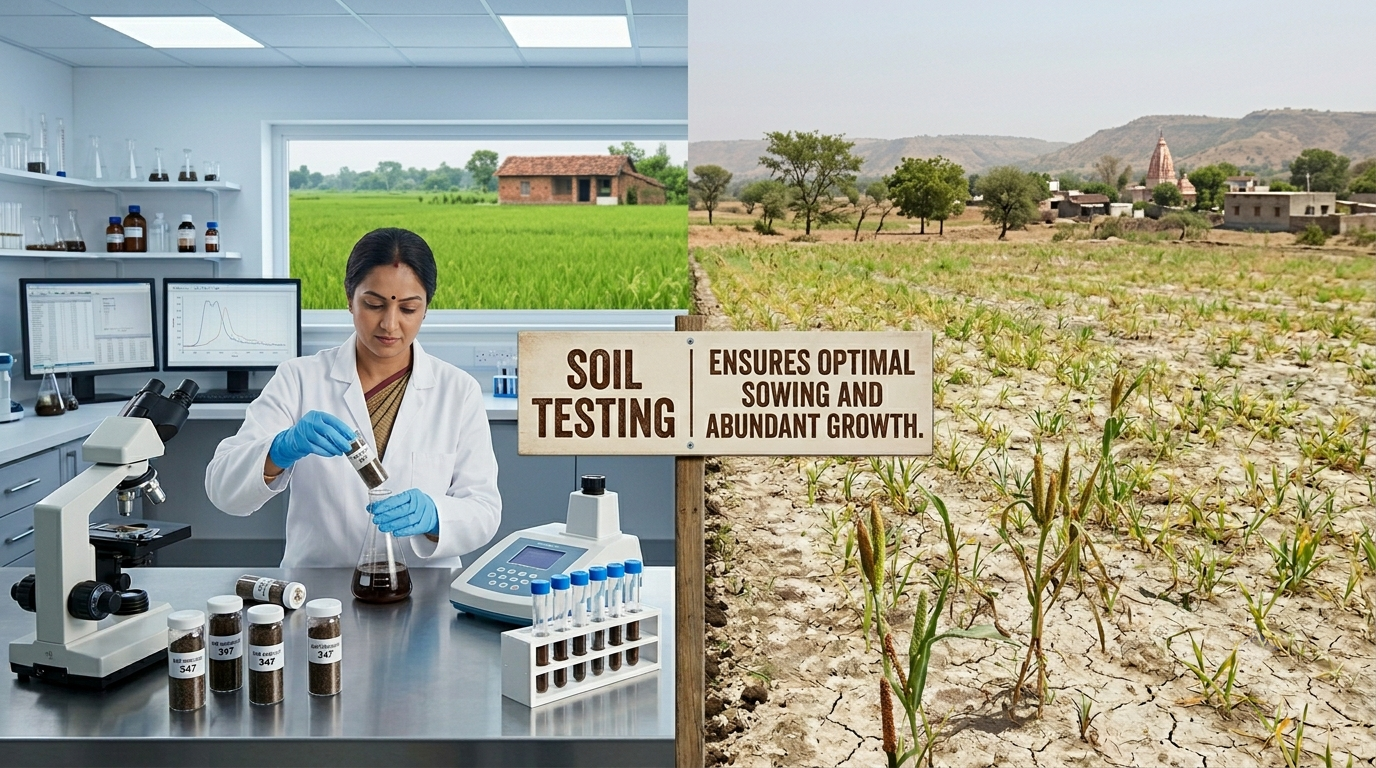
Every successful crop begins long before the seed touches the soil. While farmers often focus on seed quality, irrigation, fertilizers, and crop protection, one of the most critical steps is frequently overlooked, understanding the soil itself. Soil testing before sowing is like a health check-up for your field. It reveals hidden deficiencies, identifies potential problems, and provides a roadmap for achieving higher yields, lower input costs, and healthier crops.
The Foundation of Modern Farming
Soil is much more than a medium that holds plant roots. It is a living ecosystem that supplies water, nutrients, air, and biological support to crops. Just as no doctor would prescribe medicine without diagnosing a patient, no farmer should apply fertilizers without understanding the condition of the soil.
Unfortunately, many farmers continue to follow fertilizer practices based on habit, tradition, or recommendations intended for neighboring fields. However, no two fields are exactly alike. Even adjacent plots can differ significantly in nutrient levels, pH, organic matter content, and microbial activity. Soil testing removes this uncertainty and replaces guesswork with scientific decision-making.
What Exactly Is Soil Testing?
Soil testing is the process of analyzing soil samples to determine their physical, chemical, and sometimes biological properties. The test typically measures soil pH, electrical conductivity, organic carbon content, and the availability of essential nutrients such as nitrogen, phosphorus, potassium, sulfur, calcium, magnesium, and micronutrients like zinc, iron, manganese, copper, and boron.
The results provide a detailed picture of soil health and indicate what corrective actions may be required before sowing.
Why Soil Testing Should Be Done Before Sowing
The period before sowing is the ideal time to assess soil health because it allows farmers to make corrections before crop establishment. Once a crop is planted, many soil-related issues become difficult, costly, or even impossible to correct completely.
Testing before sowing enables farmers to prepare the field properly, balance nutrient levels, improve soil conditions, and create an environment where seeds can germinate uniformly and plants can develop strong root systems.
Preventing Nutrient Deficiencies Before They Affect the Crop
Many nutrient deficiencies begin underground long before visible symptoms appear on leaves. By the time yellowing, stunted growth, or poor flowering become noticeable, yield losses may have already occurred.
Soil testing identifies nutrient deficiencies in advance, allowing farmers to apply the right nutrients at the right time and in the right quantities. This proactive approach ensures that crops receive adequate nutrition from the beginning of their growth cycle.
Saving Money Through Precision Fertilization
One of the greatest advantages of soil testing is the reduction of unnecessary fertilizer expenses. In many cases, farmers apply more fertilizer than their crops actually require. Excessive fertilizer application not only wastes money but can also damage soil health and reduce nutrient-use efficiency.
A soil test helps farmers avoid over-application and under-application. Instead of applying fertilizers blindly, they can invest only in the nutrients that are genuinely needed. This targeted approach often results in significant savings while maintaining or even increasing yields.
Understanding Soil pH: The Hidden Yield Influencer
Soil pH plays a crucial role in nutrient availability. Even when nutrients are present in the soil, crops may be unable to absorb them if the pH is too high or too low.
Acidic soils can restrict the availability of phosphorus and certain micronutrients, while alkaline soils often reduce the uptake of iron, zinc, and manganese. Soil testing identifies pH-related issues and provides recommendations for corrective measures such as liming acidic soils or managing alkalinity.
Correcting soil pH can unlock nutrients already present in the soil, reducing the need for additional fertilizer inputs.
Improving Soil Organic Matter and Biological Activity
Healthy soil contains organic matter that supports beneficial microorganisms, improves nutrient cycling, enhances water retention, and promotes better root growth.
Soil testing often includes measurements of organic carbon, which serves as an indicator of organic matter levels. Low organic matter can signal the need for compost, farmyard manure, crop residues, cover crops, or biological soil amendments.
Increasing organic matter not only improves current crop performance but also builds long-term soil fertility.
Enhancing Water Use Efficiency
Water scarcity is becoming an increasing challenge for agriculture. Soil testing helps farmers understand soil characteristics that influence water retention and infiltration.
Balanced soils with adequate organic matter retain moisture more effectively and provide a more favorable environment for roots. As a result, crops can utilize available water more efficiently, reducing irrigation requirements and improving drought resilience.
Strengthening Root Development
A healthy root system is essential for nutrient uptake, water absorption, and crop stability. Soil problems such as nutrient imbalances, salinity, compaction, or unfavorable pH can severely restrict root growth.
By identifying and correcting these issues before sowing, farmers can create conditions that encourage vigorous root development. Strong roots enable plants to withstand environmental stresses and support higher productivity throughout the season.
Detecting Salinity and Sodicity Problems Early
In many agricultural regions, excessive salt accumulation has become a major threat to productivity. Saline and sodic soils can reduce seed germination, limit nutrient uptake, and negatively affect soil structure.
Soil testing helps detect these problems before sowing so that appropriate corrective measures can be implemented. Early intervention prevents crop losses and supports long-term soil rehabilitation.
Supporting Sustainable Agriculture
Modern agriculture faces the challenge of producing more food while protecting natural resources. Soil testing supports sustainability by reducing excessive fertilizer use, minimizing nutrient runoff, lowering environmental pollution, and promoting efficient resource management.
When farmers apply nutrients according to actual soil requirements, they improve both profitability and environmental stewardship.
The Link Between Soil Testing and Higher Yields
Higher yields are rarely the result of a single factor. They are typically achieved when multiple elements of crop management work together effectively. Soil testing provides the foundation upon which all other agronomic decisions are built.
A field with balanced nutrition, proper pH, adequate organic matter, and healthy biological activity creates the conditions necessary for optimal plant growth. As a result, crops establish more quickly, utilize nutrients more efficiently, and produce higher-quality harvests.
Common Mistakes Farmers Make
Many farmers conduct soil tests only after problems appear in the field. Others collect soil samples incorrectly, resulting in inaccurate recommendations. Some receive test reports but fail to implement the suggested corrective measures.
For soil testing to deliver maximum benefits, samples should be collected properly, analyzed by a reliable laboratory, and followed by practical field-level actions. The true value of soil testing lies not in the report itself but in the management decisions that follow.
Looking Beyond a Single Season
Soil testing should not be viewed as a one-time activity. Soil conditions change over time due to cropping patterns, irrigation practices, fertilizer use, and environmental factors. Regular testing allows farmers to monitor trends, maintain soil fertility, and make informed decisions year after year.
The most successful farmers treat soil testing as an ongoing investment rather than an occasional expense.
Final Thoughts
Before investing in seeds, fertilizers, irrigation, and crop protection products, invest in understanding your soil. Soil testing is one of the most cost-effective tools available to farmers. It transforms farming from guesswork into precision management, helping growers increase productivity, reduce costs, improve soil health, and build resilience against future challenges.
A soil test may take only a few days, but the knowledge it provides can influence the success of an entire season and the profitability of a farm for years to come. The healthiest crops begin with healthy soils, and healthy soils begin with informed decisions.
#SoilTesting #SoilHealth #SmartFarming #PrecisionAgriculture #SustainableFarming #HealthySoilHealthyPlants #FarmManagement #CropProductivity #AgricultureInnovation #SoilFertility #RegenerativeAgriculture #BetterHarvests #FarmerEducation #Agronomy #FutureOfFarming