


The Most Damaging Pests in Rice Cultivation
Know them early, manage them smartly and protect every grain you grow
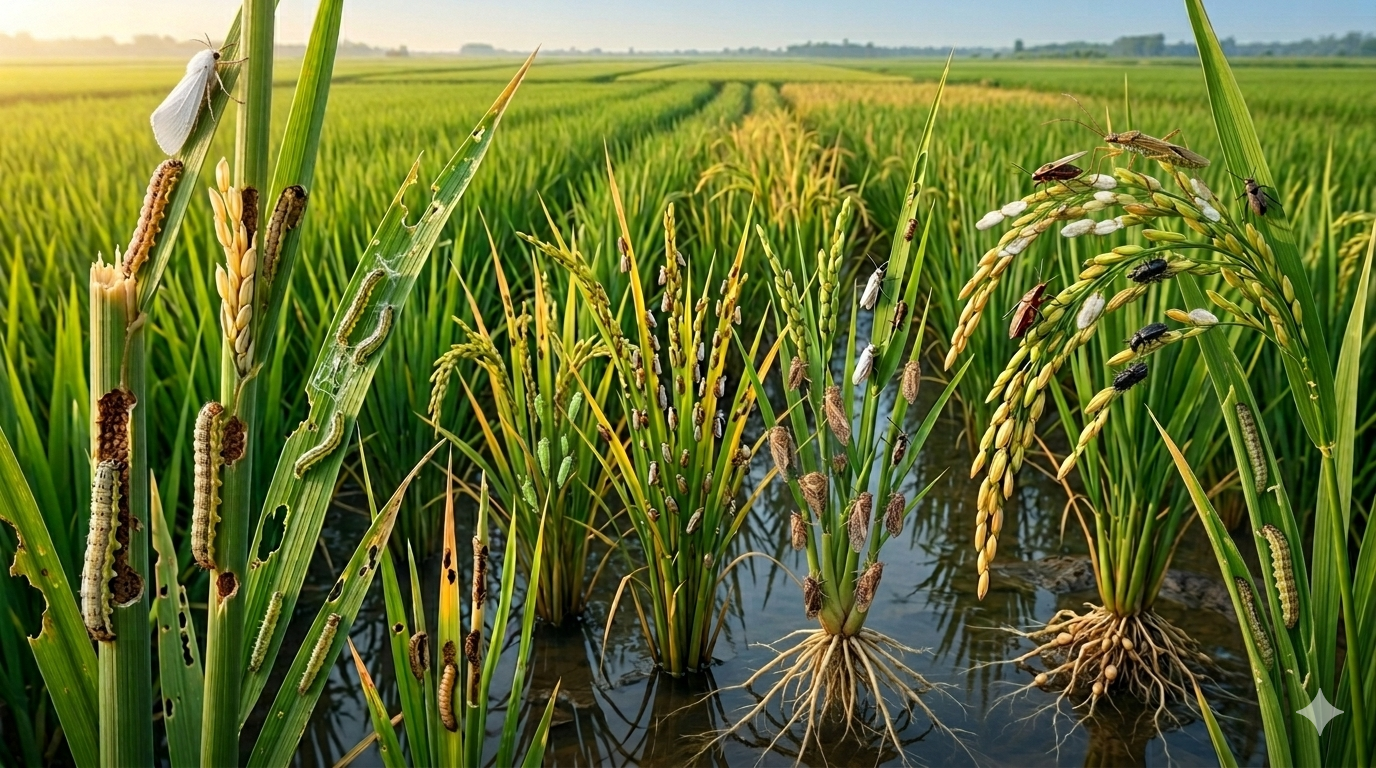
Every rice field tells a story but sometimes, the first signs of trouble aren’t drought or disease. They are tiny invaders silently feeding, boring, sucking, and destroying your crop from within. By the time visible damage appears, yield loss has often already begun. Understanding major rice pests is not optional, it is a farmer’s first line of defense.
Why Rice Pests Demand Serious Attention
Rice is attacked by over 100 insect species, but only a handful cause major economic damage. These pests directly reduce yield by feeding on plant tissues and indirectly by transmitting diseases or weakening plant physiology.
The real danger lies in their rapid multiplication, hidden feeding behavior, and stage-specific attacks, making early identification and timely intervention critical.
1. Stem Borers – The Silent Killers Inside the Plant
Stem borers are among the most destructive pests in rice ecosystems. Their larvae enter the stem and feed internally, making early detection difficult.
Damage Symptoms:
- “Dead heart” in vegetative stage (central shoot dries)
- “White ear” at reproductive stage (empty panicles)
- Weak stems and lodging
Field Reality Insight:
Farmers often mistake early damage for nutrient deficiency because the plant dries from inside. By the time white ears appear, yield loss is irreversible.
Why They Matter:
Stem borers consistently rank among the top yield-reducing pests in rice-growing regions.
2. Leaf Folder – The Hidden Leaf Feeder
Leaf folders are caterpillars that fold rice leaves and feed within the folded structure.
Damage Symptoms:
- Leaves folded longitudinally
- Scraping of green tissue
- Reduced photosynthesis
Impact:
Even moderate infestation reduces plant vigor because photosynthesis is directly compromised.
Practical Insight:
Heavy nitrogen fertilization often increases leaf folder incidence as lush crops attract them.
3. Brown Planthopper – The “Hopper Burn” Destroyer
Perhaps the most feared pest in modern rice farming, the brown planthopper (BPH) is a sap-sucking insect that attacks the base of rice plants.
Damage Symptoms:
- Yellowing patches turning brown (“hopper burn”)
- Sudden drying of entire field patches
- Stunted growth and poor grain filling
Why It’s Dangerous:
- Sucks plant sap, weakening the plant
- Transmits viral diseases
- Can cause up to severe yield losses under heavy infestation
Field Insight:
Excessive nitrogen fertilizers and indiscriminate pesticide use often trigger BPH outbreaks by disrupting natural predators.
4. White-Backed Planthopper – The Secondary but Serious Threat
Closely related to BPH, this pest also feeds on plant sap and causes similar damage.
Damage Symptoms:
- Yellowing and drying of plants
- Reduced tillering
- Patchy field damage
Practical Note:
Often overlooked because symptoms resemble BPH, but management strategies remain similar.
5. Gall Midge – The Growth Disruptor
Gall midge larvae attack the growing point of rice plants.
Damage Symptoms:
- Formation of “silver shoots” or tubular structures
- No panicle formation
- Poor tillering
Impact:
Direct loss of productive tillers, leading to significant yield reduction.
Field Insight:
Early-stage crops are most vulnerable, especially in humid conditions.
6. Rice Bug – The Grain Quality Destroyer
Rice bugs attack during the grain-filling stage.
Damage Symptoms:
- Feeding on developing grains
- Chaffy or partially filled grains
- Poor grain quality
Practical Impact:
Even if yield quantity remains, market value drops due to inferior grain quality.
7. Rice Stem Maggot – The Early Stage Attacker
This pest mainly affects young rice plants.
Damage Symptoms:
- Yellowing of central leaf
- Weak tillers
- Reduced plant vigor
Insight:
Often confused with nutrient deficiency, delaying proper control measures.
8. Root Knot Nematodes – The Underground Threat
Though microscopic, nematodes cause significant root damage.
Damage Symptoms:
- Root galls (knots)
- Poor nutrient uptake
- Stunted growth and low yield
Practical Insight:
Damage is often noticed only after uprooting plants, making preventive management crucial.
Common Patterns Across Rice Pests
Despite their differences, most major rice pests share three critical characteristics:
- They attack at specific crop stages (vegetative, tillering, or grain filling)
- They reduce yield either directly (feeding) or indirectly (disease transmission)
- Their outbreaks are often linked to agronomic practices, especially excessive fertilizer use and poor field monitoring
What Farmers Often Miss
- Early scouting is more powerful than late spraying
- Overuse of chemicals can worsen pest problems by killing beneficial insects
- Balanced nutrition reduces pest attraction
- Field hygiene and crop rotation break pest cycles
In modern rice cultivation, pest management is no longer about reacting, it is about anticipating and preventing.
Rice pests are not just biological threats, they are economic disruptors. A single unchecked infestation can wipe out weeks of effort and investment. The key lies in understanding pest behavior, recognizing early symptoms, and integrating preventive strategies into routine farming practices.
When farmers shift from reactive spraying to proactive management, they not only protect yield but also improve long-term soil and crop health.
#RiceFarming #PaddyCrop #CropProtection #AgricultureIndia #RicePests #SustainableFarming #IntegratedPestManagement #OrganicFarming #FarmerAwareness #AgriInnovation #SoilHealth #CropYield