

The Power of Water Testing in Farming
Discover how understanding your irrigation water can protect your soil, improve crop growth, reduce input wastage and help you make smarter farming decisions
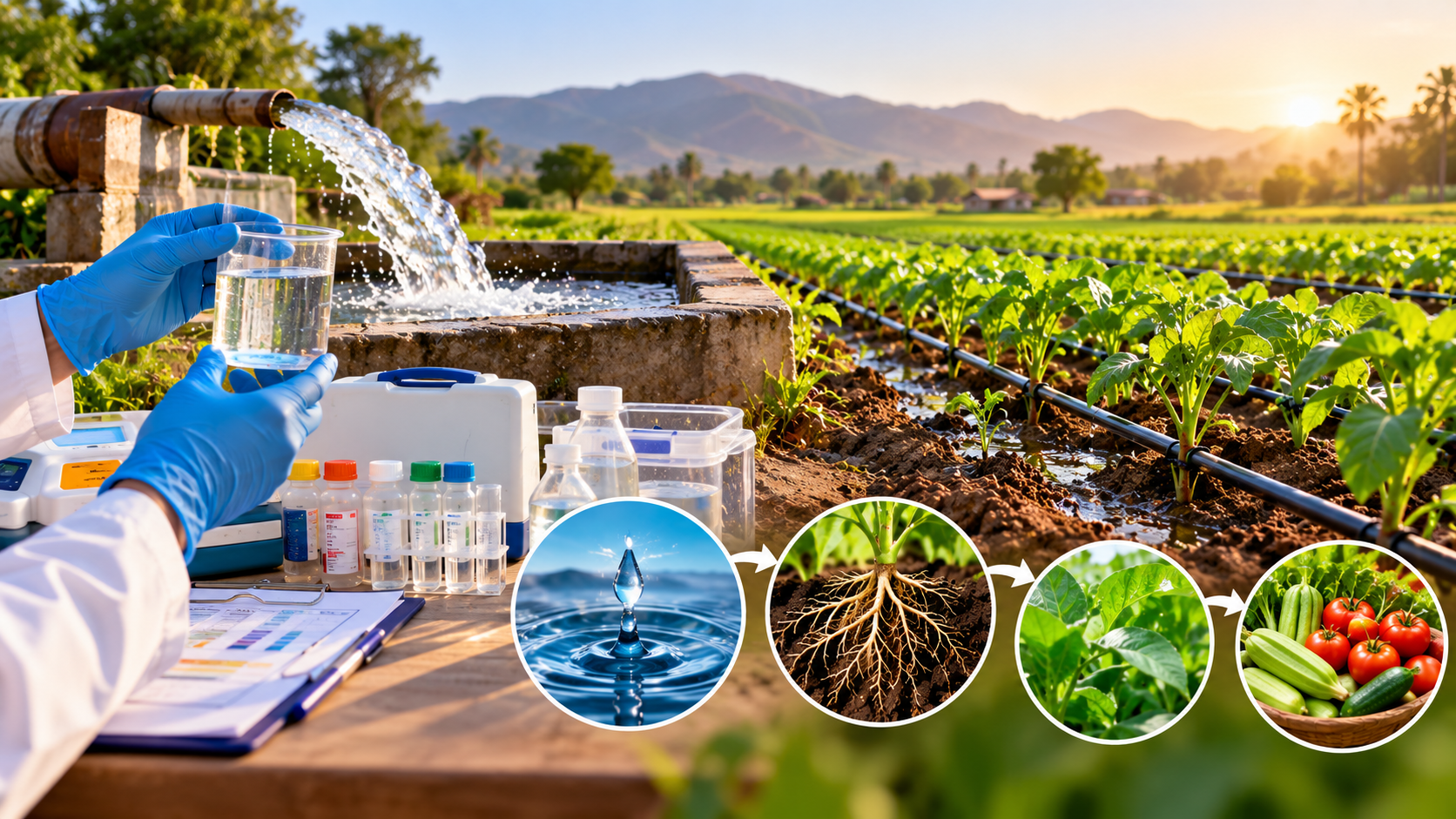
Two farmers may grow the same crop, use the same fertilisers and irrigate their fields with the same quantity of water yet achieve very different results. One often-overlooked reason could be the quality of their irrigation water. Water may look clean, smell normal and appear perfectly suitable for farming, but its dissolved salts, pH, minerals and other chemical properties can silently influence crop health, soil fertility and productivity.
Water is one of agriculture's most essential resources, but its value depends on more than availability. The quality of water used for irrigation, fertigation, spraying and other agricultural activities can significantly influence the success of a farming operation. This is why water testing deserves to be a routine part of modern, scientific and sustainable agriculture.
What Is Water Testing in Agriculture?
Agricultural water testing is the process of analysing water to understand its physical, chemical and, where necessary, microbiological characteristics. It helps determine whether a particular water source is suitable for a specific agricultural purpose.
Farmers commonly use water from borewells, open wells, rivers, canals, farm ponds, reservoirs and rainwater harvesting systems. Although these sources may supply enough water for irrigation, their quality can vary considerably depending on geology, rainfall, evaporation, fertiliser runoff, industrial discharge, sewage contamination and local environmental conditions.
Water testing helps identify these differences before they become costly agricultural problems. It can reveal excessive salinity, unsuitable pH, high sodium levels, bicarbonates, chloride, boron, nutrient concentrations and potential contamination that may affect crops, soil or farm workers.
The most important principle is simple: water suitability is determined by its quality, the crop being grown, the soil conditions and the intended use not merely by its appearance.
Why Water Quality Matters More Than Many Farmers Realise
Water does much more than keep plants hydrated. It dissolves and transports nutrients, supports photosynthesis, maintains cell structure, regulates plant temperature and facilitates biological activity in the soil.
However, water with unsuitable chemical characteristics can interfere with these functions. Excessive dissolved salts can make it harder for roots to absorb water. High sodium levels can damage soil structure, reducing infiltration and drainage. An unsuitable pH or high bicarbonate concentration can affect nutrient availability and the performance of certain fertilisers.
Over time, these problems may contribute to poor germination, uneven crop growth, leaf injury, reduced yield, declining soil productivity and increased expenditure on agricultural inputs.
The effects are not always immediate. A field may perform reasonably well for several seasons before the cumulative effects of salt accumulation or soil structural deterioration become obvious. By the time symptoms appear, correcting the problem may be more expensive than preventing it.
Regular water testing provides an opportunity to identify risks early and make informed decisions before they affect the crop.
Important Water Quality Parameters Every Farmer Should Know
A useful water test goes beyond measuring pH or checking whether the water is clear. Different parameters reveal different risks, and interpreting them together provides a more reliable picture of water suitability.
pH: Understanding acidity and alkalinity
The pH of water indicates whether it is acidic, neutral or alkaline. The pH scale ranges from 0 to 14, with 7 representing neutral water.
Irrigation water with a pH around 6.5–8.4 is often encountered in agriculture, but this range alone does not establish whether water is suitable for every crop or agricultural application. The total mineral composition and alkalinity also matter.
Highly alkaline water can contribute to nutrient availability problems, particularly where bicarbonates are elevated. It may also interfere with certain fertilisers and crop-protection products mixed in spray tanks. Acidic water may contribute to corrosion of irrigation equipment or other problems, depending on its composition.
Practical benefit: Measuring pH helps farmers investigate unexpected nutrient deficiencies, assess water for fertigation and evaluate its compatibility with agricultural formulations.
Electrical conductivity (EC): Detecting dissolved salts
Electrical conductivity measures how readily water conducts electricity, which is influenced by the concentration of dissolved ions. It is widely used as an indicator of salinity.
Water with high EC contains a greater concentration of dissolved ionic substances, although EC does not identify which salts are present. Sodium, chloride, calcium, magnesium and other ions can contribute to the reading.
When excessive salts accumulate in the root zone, plants may struggle to absorb water even when the soil appears moist. This condition is sometimes described as physiological drought: water is present, but the plant cannot access it easily enough.
Different crops have different salinity tolerances. Sensitive crops may experience problems at levels that more tolerant crops can withstand.
Practical benefit: EC testing helps farmers assess salinity risk, select suitable water sources, plan irrigation management and determine whether a more detailed analysis is necessary.
Total dissolved solids (TDS): Understanding the mineral load
Total dissolved solids indicate the approximate total concentration of dissolved substances in water, commonly expressed in milligrams per litre (mg/L) or parts per million (ppm).
High TDS can indicate a substantial mineral or salt load, but it does not reveal the specific composition of the dissolved material. Two water samples with similar TDS readings may have very different effects on crops and soil.
TDS is useful as a screening parameter, but it should not replace a full irrigation-water analysis when salinity or sodium-related problems are suspected.
Practical benefit: TDS provides a convenient preliminary indication of dissolved material and helps farmers identify water sources that may require further investigation.
Sodium, calcium and magnesium: Protecting soil structure
These three elements are particularly important when evaluating irrigation water.
Calcium and magnesium help maintain soil aggregation, while excessive sodium relative to calcium and magnesium can cause soil particles to disperse. This can reduce infiltration, restrict drainage and make the soil surface prone to crusting.
The Sodium Adsorption Ratio (SAR) evaluates the relative concentration of sodium compared with calcium and magnesium. It is a key parameter for assessing potential sodium-related soil problems.
However, SAR must be interpreted alongside EC, soil texture, drainage conditions and other chemical characteristics. Water with a concerning sodium balance can create different risks depending on its overall salinity and the soil receiving it.
Practical benefit: These measurements help identify water that could gradually reduce soil permeability, particularly in fine-textured soils and fields with poor drainage.
Bicarbonates and carbonates: Identifying alkalinity-related risks
Bicarbonates and carbonates are important components of irrigation-water chemistry. At elevated concentrations, they can interact with calcium and magnesium, potentially causing precipitation and altering the balance of dissolved ions.
High bicarbonate concentrations can also contribute to deposits in irrigation systems and interfere with some nutrient-management practices.
Farmers using alkaline groundwater for drip irrigation or fertigation should pay particular attention to these parameters, especially when they observe recurring deposits, blocked emitters or inconsistent fertiliser performance.
Practical benefit: Testing bicarbonates and carbonates helps assess alkalinity, potential scaling and certain sodium-related risks that pH alone cannot explain.
Chloride and boron: Detecting crop toxicity risks
Chloride and boron are naturally occurring elements that plants need only in appropriate amounts, and their tolerance varies significantly between crops.
Excess chloride can injure sensitive plants, especially when salts accumulate in the root zone or when overhead irrigation deposits chloride on leaves. Excess boron can also cause toxicity, even when other water-quality indicators appear acceptable.
Potential symptoms include leaf-tip or leaf-margin scorching, chlorosis, reduced growth and lower productivity. However, these symptoms are not exclusive to chloride or boron toxicity, so visual diagnosis alone is insufficient.
Practical benefit: Measuring chloride and boron can help farmers investigate unexplained leaf injury and determine whether a water source is appropriate for sensitive crops.
Nitrates, sulphates and other dissolved nutrients
Irrigation water can contain plant nutrients such as nitrate, calcium, magnesium and sulphur. In suitable concentrations, these may contribute to crop nutrition.
However, nutrient contributions from water need to be considered alongside fertiliser applications. Ignoring nitrate in irrigation water, for example, can result in more nitrogen being applied than the crop requires.
Excessive nutrient concentrations may also indicate contamination or create environmental concerns, depending on the source and surrounding conditions.
Practical benefit: Testing nutrient concentrations can improve fertiliser planning, prevent unnecessary expenditure and help identify water-quality changes that deserve attention.
Microbiological contamination
Water from open wells, ponds, canals, rivers and sources exposed to sewage, livestock waste or contaminated runoff may carry harmful microorganisms.
Microbiological testing is especially relevant when water is used to wash harvested produce, prepare certain agricultural products or support activities where contamination could affect food safety or worker health.
For irrigation alone, the appropriate testing requirements depend on the source, crop, irrigation method and potential exposure of the edible portion of the plant.
Practical benefit: Microbiological testing helps assess contamination risks that cannot be identified through pH, EC or TDS measurements.
The Major Benefits of Water Testing for Farmers
Water testing offers several practical benefits that can improve farm management, protect natural resources and support better agricultural decisions. Its value lies in identifying potential problems early and helping farmers choose appropriate solutions based on actual water quality.
1. Better Crop Growth and Productivity
Water is essential for seed germination, nutrient transport, photosynthesis and the maintenance of plant cells. However, water containing excessive salts or unsuitable concentrations of certain minerals can interfere with these processes.
High salinity can make it difficult for roots to absorb water, even when the soil is sufficiently moist. Excessive concentrations of specific elements may also cause toxicity, while unsuitable water chemistry can contribute to nutrient availability problems.
Regular water testing helps farmers identify these risks and take corrective measures before they significantly affect crop development. Although testing alone cannot guarantee higher yields, it provides valuable information for maintaining favourable growing conditions.
2. Protection of Long-Term Soil Fertility
Soil health depends on more than the nutrients supplied through fertilisers and organic manures. The quality of irrigation water also influences the physical and chemical condition of the soil.
Repeated irrigation with saline water can cause salts to accumulate in the root zone, particularly where drainage is inadequate or rainfall is insufficient to flush them away. Water with excessive sodium relative to calcium and magnesium can gradually damage soil structure, reducing infiltration and increasing the risk of surface crusting.
Water testing helps farmers identify these problems before they become severe. When interpreted alongside soil analysis, it supports better decisions about irrigation, drainage, crop selection and soil amendments.
3. More Efficient Irrigation Management
The suitability of water depends partly on the irrigation method being used. Drip irrigation, sprinkler systems and conventional surface irrigation have different requirements and can respond differently to water-quality problems.
For example, dissolved minerals may form deposits inside pipes and emitters, while suspended particles can obstruct narrow passages. Saline water may also require more careful irrigation scheduling and root-zone management.
Testing helps farmers determine whether their water requires filtration, specialised treatment or more frequent system maintenance. It also helps identify situations where an alternative water source may be more suitable.
The result is a more informed irrigation strategy that considers both water quantity and water quality.
4. Smarter Fertiliser and Nutrient Management
Irrigation water can contain nutrients such as nitrogen, calcium, magnesium and sulphur. These nutrients may contribute to crop nutrition, depending on their concentrations and availability.
If farmers ignore the nutrients already supplied through irrigation, they may apply more fertiliser than necessary. Conversely, unsuitable water chemistry may interfere with nutrient availability or the performance of certain fertiliser formulations.
Water testing helps farmers understand the nutrient contribution of their irrigation source and incorporate it into their fertiliser programme. This is particularly useful in fertigation, where fertilisers are delivered through irrigation systems.
A more accurate understanding of water chemistry can help reduce unnecessary input expenditure and improve nutrient-management decisions.
5. Reduced Equipment and Maintenance Problems
Irrigation systems require water that is compatible with their design and operating conditions. Water containing excessive suspended solids or certain dissolved minerals can cause clogging, scaling and uneven water distribution.
These problems are especially important in drip irrigation, where small emitters can become blocked and some plants may receive less water than others.
Water testing can identify the characteristics responsible for many of these problems. Farmers can then select appropriate filtration, flushing schedules or treatment methods.
Preventive maintenance based on water-quality results can help reduce avoidable downtime, maintain irrigation uniformity and extend the useful life of equipment.
6. Early Identification of Crop Stress
Poor growth, leaf-tip scorching, chlorosis, weak germination and reduced yield can arise from several causes, including pests, diseases, nutrient deficiencies, irrigation errors and unsuitable water quality.
Without proper investigation, farmers may respond by applying additional fertilisers or crop-protection products when the underlying issue lies elsewhere.
Water testing provides an additional diagnostic tool. For example, elevated salinity, chloride or boron may help explain certain patterns of leaf injury or stunted growth.
These findings must be interpreted alongside soil tests, crop symptoms and field conditions. Nevertheless, water testing can help farmers narrow down possible causes and avoid unnecessary treatments.
7. Better Crop Selection and Variety Planning
Different crops have different tolerances to salinity, specific dissolved ions and other water-quality conditions. Water that is suitable for one crop may be unsuitable for another.
When a farm depends on a limited water source, testing can help farmers select crops and varieties that are better suited to the available water quality.
For example, if irrigation water has elevated salinity, a relatively salt-tolerant crop may be a more practical option than a sensitive crop, provided the measured salinity, soil conditions and expected yield support that decision.
Crop tolerance should never be treated as unlimited. Even salt-tolerant crops can suffer when salinity becomes excessive.
8. Improved Water-Source Selection
Farmers may have access to multiple water sources, including borewells, open wells, farm ponds, canals and harvested rainwater. The quality of these sources can vary considerably.
Testing each source helps farmers compare their suitability for irrigation, fertigation and other agricultural uses. It can also reveal whether a source that was previously suitable has changed in quality.
Where technically appropriate, water from different sources may sometimes be blended to achieve a more suitable composition. However, blending must be based on actual test results and a sound understanding of the resulting water chemistry.
Testing therefore helps farmers make more informed choices about which source to use for a particular crop or application.
9. More Reliable Agricultural Spraying
Water quality is also important when preparing foliar sprays and certain crop-protection mixtures. Water pH, hardness, alkalinity and dissolved minerals can influence the stability, compatibility or effectiveness of particular formulations.
Some products may be sensitive to alkaline water or specific dissolved ions, while others may be less affected. Therefore, farmers should not assume that the same water source is equally suitable for every spray application.
Testing can help identify potential compatibility concerns. Farmers should also follow the product label, manufacturer instructions and recommended mixing procedures, including any required water-conditioning measures.
This is particularly relevant where spray performance is inconsistent or where several products are routinely mixed in a single tank.
10. Better Resource Efficiency and Farm Profitability
Water testing supports better decision-making by reducing uncertainty about one of the farm's most important inputs.
When farmers understand their water quality, they can make more informed choices about irrigation, fertiliser application, filtration, crop selection and corrective treatments.
These decisions may help reduce avoidable expenses, minimise equipment problems and protect crop productivity. The financial benefit depends on the problems identified and the actions taken, but testing provides a practical foundation for managing resources more efficiently.
How to Collect a Water Sample for Testing
The reliability of a water-testing report depends partly on the quality of the sample submitted to the laboratory. A contaminated or unrepresentative sample can produce misleading results and lead to inappropriate decisions.
Farmers should follow the laboratory's sampling instructions and take the following precautions.
Step 1: Select the appropriate container. Obtain a clean sample bottle suitable for the required analysis. Routine chemical testing may require a clean plastic bottle, while microbiological analysis generally requires a sterile container. The laboratory should specify the correct type.
Step 2: Prepare the water source. For a borewell or pumped source, allow the water to flow until it represents the source under normal operating conditions. Follow the laboratory's instructions for stored water, open wells, ponds and surface-water sources, as the sampling procedure may differ.
Step 3: Collect the sample carefully. Avoid touching the inside of the container or its cap. Prevent the entry of soil, dust, plant material and other foreign substances. Do not rinse a sterile container intended for microbiological testing.
Step 4: Label the sample correctly. Record the sampling location, source type, date and time. If multiple sources are being tested, label each sample separately to avoid confusion.
Step 5: Transport the sample promptly. Follow the laboratory's instructions for storage, temperature and delivery time. Microbiological samples may require particularly careful handling to prevent changes before analysis.
Step 6: Explain the intended use. Inform the laboratory whether the water is intended for irrigation, fertigation, foliar spraying, produce washing or another purpose. This helps determine which parameters should be analysed.
A practical tip for borewell owners
If a farm uses a borewell throughout the year, consider establishing a baseline water-quality report and comparing subsequent results with it.
If water is also stored in a pond or tank, test that source separately when storage conditions may affect its quality. Seasonal sampling can be particularly useful where water chemistry changes after the monsoon, during prolonged pumping or following suspected contamination.
How Often Should Farmers Test Their Irrigation Water?
The ideal testing frequency depends on the water source, local environmental conditions, crop sensitivity and the risks associated with the intended use.
For many farms, annual laboratory testing is a reasonable starting point for routine chemical monitoring. However, a more frequent schedule may be necessary where groundwater quality is variable, high-value crops are cultivated or water-related problems have already been identified.
Consider the following practical approach:
Before planting a new crop: Test the irrigation source to establish whether its quality is suitable for the crop and soil.
When adopting a new water source: Obtain a baseline analysis before relying on it for regular irrigation.
At least annually as a general starting point: Review the main chemical parameters, particularly when groundwater is the primary source.
After significant seasonal changes: Consider retesting where monsoon recharge, evaporation or runoff may alter water quality.
When crop symptoms appear: Investigate water quality alongside soil fertility, irrigation practices, pest pressure and disease symptoms.
When installing a fertigation or drip irrigation system: Assess the water parameters relevant to the equipment and intended use.
After suspected contamination: Arrange appropriate testing promptly rather than relying on an older report.
Farmers cultivating vegetables, fruit crops and crops under protected cultivation may benefit from more frequent monitoring because water-quality problems can have substantial economic consequences.
Field instruments that measure pH and electrical conductivity can support routine monitoring between laboratory tests. However, these instruments cannot identify every dissolved ion or detect all chemical and microbiological contaminants.
The objective is to establish a testing schedule that reflects the actual risks of the farm rather than relying on a fixed frequency for every situation.
How to Read and Understand a Water Testing Report
A water-testing report is useful only when its findings are interpreted correctly and translated into appropriate farm-management decisions.
Begin by checking the sample identification, collection date, units of measurement and parameters tested. Confirm that the report covers the characteristics relevant to the intended agricultural use.
If electrical conductivity is elevated, investigate the overall salinity level and the concentrations of individual ions. If the Sodium Adsorption Ratio is concerning, assess the relationship between sodium, calcium and magnesium, while also considering EC and soil conditions.
If pH is high, examine alkalinity and bicarbonate concentrations rather than assuming pH alone explains the problem. Similarly, if nitrate or other nutrients are present in significant concentrations, consider their contribution to the crop's nutrient requirements.
It is important to understand that water-quality parameters interact with one another. Water with a relatively high pH may still be suitable for a particular crop, while water with an acceptable pH can have excessive salinity or sodium-related risks.
The report should therefore be interpreted in the context of crop type, soil texture, drainage, irrigation method and local growing conditions.
If the results indicate a potential problem, consult a qualified agricultural expert or soil and water testing laboratory before investing in corrective treatments.
A test result is not simply a pass-or-fail certificate. It is a tool for understanding the water and deciding how best to manage it.
What Should Farmers Do If Water Quality Is Poor?
An unfavourable water-testing result does not necessarily mean that the source must be abandoned. The appropriate response depends on the specific parameter, its concentration, the crop being grown and the farm's soil and drainage conditions.
If salinity is high
Evaluate crop salt tolerance, soil salinity, drainage and the availability of alternative water sources. Where appropriate, accumulated salts may be managed through leaching with suitable water, provided that effective drainage is available.
Simply applying more irrigation water without adequate drainage can worsen the problem.
If sodium-related risks are high
Assess the soil's infiltration rate, structure and drainage characteristics. Soil amendments such as gypsum may be appropriate in certain circumstances, but their requirement and application rate should be based on suitable water and soil analysis.
Applying gypsum automatically to every field irrigated with hard or saline water is not a sound management practice.
If alkalinity or bicarbonates are elevated
Investigate the potential for mineral precipitation, nutrient interactions and irrigation-system scaling. Depending on the results, appropriate treatment or carefully controlled acidification may be considered.
Such treatments require technical assessment, correct dosing and suitable safety precautions. They should not be undertaken simply because the water has a high pH.
If chloride or boron is excessive
Consider alternative water sources, crop selection or scientifically evaluated blending options. Ordinary filtration does not necessarily remove dissolved chloride or boron, so the treatment method must match the specific problem.
If contamination is suspected
Identify the potential source and obtain appropriate chemical or microbiological testing. Do not assume that water is safe because it looks clear or has no unusual smell.
If the source may be contaminated by sewage, industrial discharge or agricultural chemicals, seek professional advice on its suitability for the intended use.
If water causes irrigation-system blockages
Determine whether the problem results from suspended particles, mineral deposits, biological growth or a combination of factors. The appropriate response may involve filtration, system flushing, maintenance or water treatment.
The most important rule is to identify the cause before selecting the solution. Unnecessary treatment can increase costs and may introduce additional problems.
Water Testing and Sustainable Agriculture
Sustainable agriculture requires farmers to protect the natural resources that support crop production over the long term. Water quality is an essential part of that responsibility.
Repeated use of unsuitable irrigation water can contribute to salinity, sodicity and reduced soil permeability. These problems may gradually affect soil productivity and increase the resources required to maintain crop growth.
Regular testing helps farmers identify emerging risks and make informed decisions about water conservation, irrigation scheduling, fertigation and crop selection.
It is particularly valuable in areas where groundwater is the primary irrigation source. Groundwater chemistry depends partly on local geology and aquifer conditions, so nearby farms may obtain water with substantially different characteristics.
Water testing also complements soil testing. While soil analysis helps identify existing soil conditions and nutrient status, water analysis helps farmers understand what irrigation may contribute to the soil over time.
Together with appropriate drainage, efficient irrigation systems and regular crop monitoring, these practices can support more responsible water use and better long-term farm management.
Sustainable agriculture is not simply about using less water. It is also about understanding the quality of the water being used and ensuring that irrigation practices do not gradually undermine the land's productive capacity.
Common Mistakes Farmers Should Avoid
Several misconceptions can reduce the value of water testing and lead to poor agricultural decisions.
Judging water by appearance: Clear water may still contain excessive salts, unsuitable minerals or harmful contaminants. Appearance alone is not a reliable indicator of irrigation suitability.
Checking only pH: pH provides useful information, but it does not reveal the complete chemical composition of water. EC, sodium, calcium, magnesium, bicarbonates and other parameters may be equally important.
Assuming all crops have the same tolerance: Crop sensitivity varies considerably. Water that works well for one crop may cause problems in another, particularly when salinity or specific ions are elevated.
Ignoring soil characteristics: Water quality cannot be evaluated independently of soil texture, drainage and existing soil salinity. The same water can create different risks in different fields.
Applying corrective chemicals without analysis: Unnecessary or incorrectly calculated treatments can increase costs and create additional chemical or soil-management problems.
Relying indefinitely on old reports: Water quality can change with seasons, pumping patterns, recharge and contamination events. Earlier results should not be assumed to represent current conditions indefinitely.
Confusing drinking-water suitability with irrigation suitability: Drinking-water and irrigation-water assessments serve different purposes. Water suitable for one use is not automatically suitable for the other.
Ignoring nutrients supplied by irrigation water: Dissolved nutrients can contribute to crop requirements and should be considered when preparing a fertiliser programme.
Treating every crop symptom as a water problem: Poor growth and leaf injury can have multiple causes. Water testing should complement, not replace, proper crop diagnosis and soil assessment.
Avoiding these mistakes helps farmers use test results more effectively and select solutions that address the actual problem.
A Simple Water Testing Action Plan for Every Farm
Farmers can introduce water testing into their regular management practices without beginning with a complicated monitoring programme.
Start by identifying the main water sources used on the farm. These may include borewells, open wells, canals, farm ponds and stored rainwater.
Collect representative samples and request laboratory analysis for parameters appropriate to the source and intended use. For irrigation, this commonly includes pH, EC, major dissolved ions and sodium-related parameters. Additional testing for nutrients, specific toxic elements or microbiological contamination may be necessary depending on local risks.
Once the report is available, interpret the findings in relation to the crops grown, soil conditions, drainage and irrigation method. If a concern is identified, obtain appropriate technical advice before changing irrigation practices, applying amendments or investing in water-treatment equipment.
Maintain a farm record containing the water-testing reports, sampling dates, crop details, fertiliser applications, irrigation schedules and observations of crop performance. Comparing results over time can help identify changes and assess whether management decisions are working.
For farms with multiple water sources, maintain separate records for each source. This makes it easier to identify which sources are most suitable for different crops or agricultural applications.
A practical monitoring programme should be simple enough to follow consistently and detailed enough to support informed decisions.
Better Water Decisions Begin with Testing
Water testing is much more than a laboratory procedure. It is a practical way to understand one of agriculture's most important inputs and make informed decisions about crop production, soil protection, nutrient management and irrigation.
Its benefits extend beyond the immediate growing season. Regular testing can help farmers recognise emerging problems, protect long-term soil productivity, improve irrigation management and use agricultural resources more responsibly.
Every farm has its own combination of soil, climate, crops and water sources. Therefore, effective water management must be based on actual conditions rather than assumptions.
Before investing more in fertilisers, irrigation systems or crop treatments, take a closer look at the water that supports your farm. A simple test today may help prevent a much larger problem tomorrow.
#WaterTesting #AgriculturalWater #IrrigationManagement #WaterQuality #SmartFarming #SustainableAgriculture #PrecisionAgriculture #SoilHealth #CropProductivity #WaterConservation #FarmManagement #Fertigation #IndianAgriculture #FarmerEducation #ModernFarming